
Study to understand the behaviour of filamentous algae - Life eCOadapt50
| Date of onset | 09/07/2024 |
| Sector | Fisheries and tourism |
| Lead partner | GALP Coast Brava |
| Territory of performance | Badia de Pals and les Illes Medes (Baix Empordà) |
| Climatic risk | Increase in eutrophication episodes Biodiversity loss Loss of habitats |
| Budget | 15.000,00 € |
Gorgonians, corals and sponges in decline due to the proliferation of filamentous algae
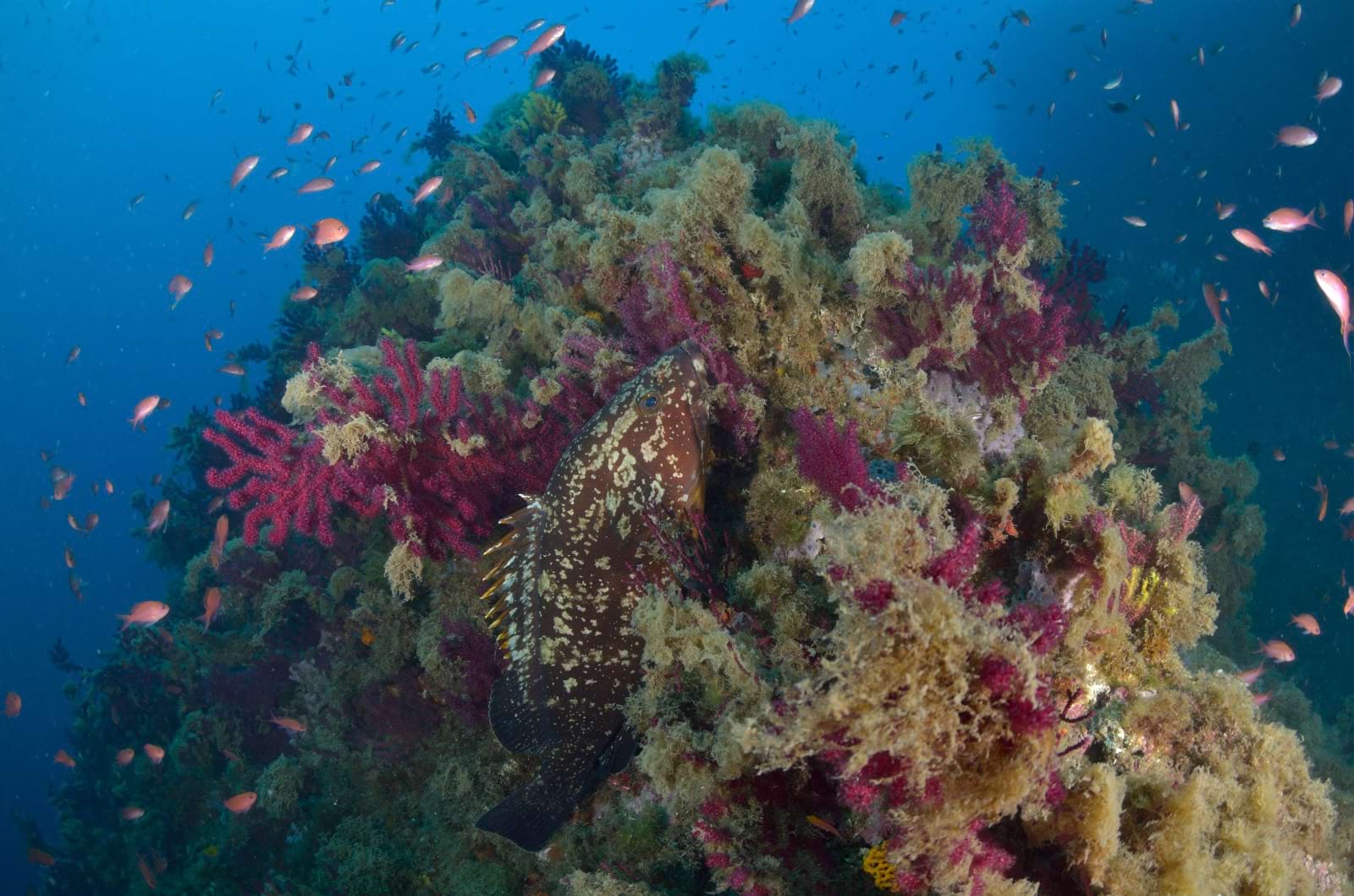
In recent years, there has been a proliferation of filamentous algae, which is becoming increasingly persistent, affecting sessile marine communities such as gorgonians, corals, sponges and bryozoans. However, the presence of algae covering the seabed and its marine communities reduces the tourist appeal of the seabed and means that the level of satisfaction is not as high as expected. Furthermore, everything seems to indicate that the massive presence of these filamentous algae can have a negative impact on traditional fishing activities in the area.
These algae formations are commonly known as sea weed, and are generally made up of species of brown algae such as Acinetospora crinita, Nematochrysopsis marina, Zosterocarpus oedogonium and Chrysonephos lewisii.
In general terms, these algae proliferate in early spring, when sea water temperatures begin to rise and wind and sea storms become less frequent, but climate change is altering these patterns. Furthermore, certain scientific studies indicate that these algae blooms may be encouraged by water eutrophication as a result of certain anthropogenic actions such as agricultural activities.
How does water quality influence this proliferation?
For all these reasons, a pilot project to control filamentous algae will be launched this year on the Illes Medes, promoted by the Montgrí, Illes Medes I and Baix Ter Natural Park and the University of Girona, with the collaboration of the Estartit diving centres, with the aim of studying this problem in depth.
As part of the Life eCOadapt50 project, it has been decided to collaborate in this study by supporting the analysis of seawater quality in Pals Bay and the Illes Medes, which is essential for establishing a relationship with the proliferation of filamentous algae. However, the collaboration also includes carrying out several communication campaigns aimed at raising awareness and sensitising the public to this issue.