
Life eCOadapt50 organizes two specific workshops for the fishing and forestry sectors - Life eCOadapt50
Workshop for the fishing sector
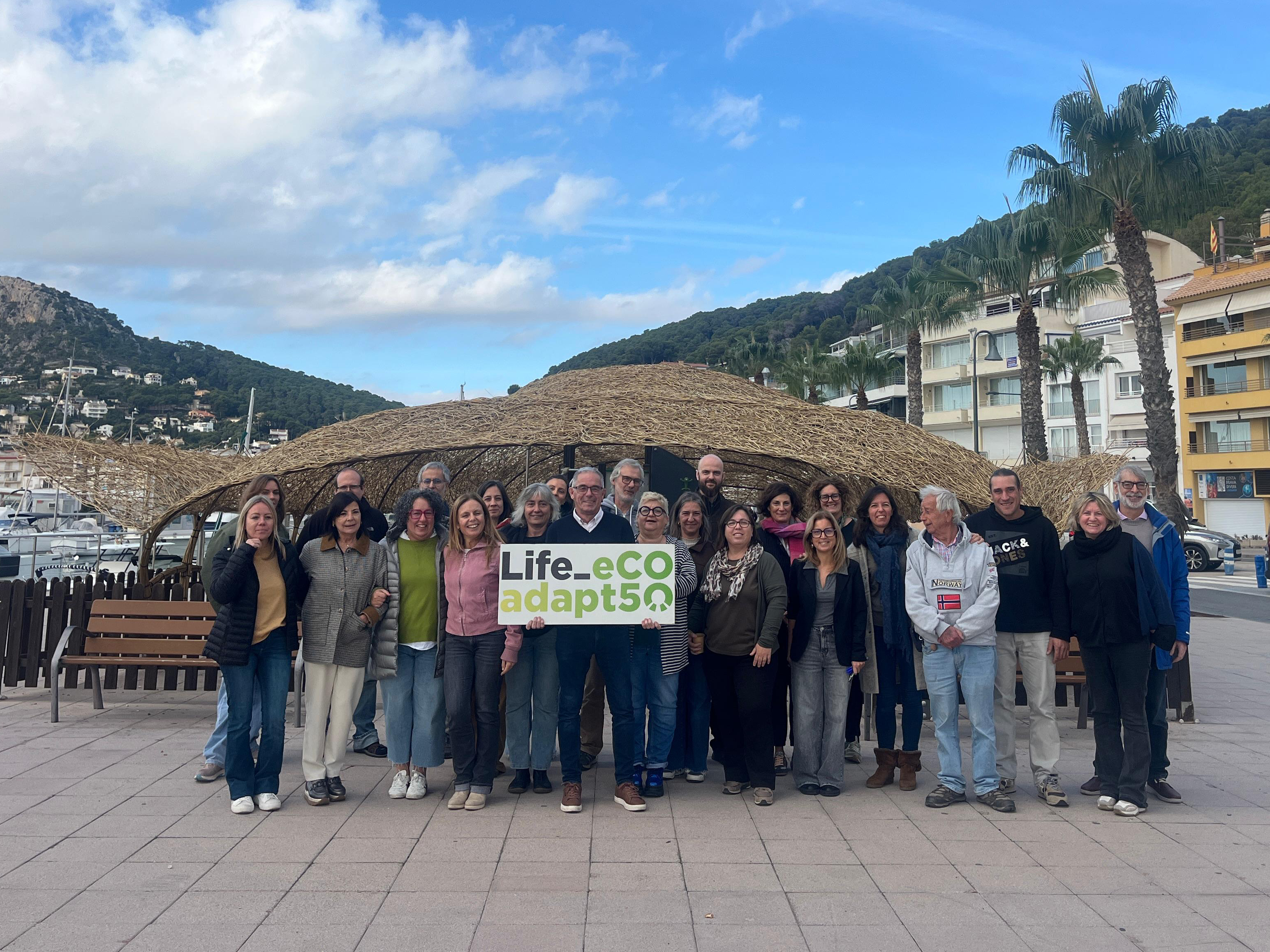
The Local Action Group GALP Costa Brava, in collaboration with the Barcelona Chamber of Commerce, leader of work package 6 on training and capacity building for the project, organized on November 19 the event “The effects of climate change on the Catalan fishing sector: Living Lab GALP CB and workshop” at the EMD Estartit Auditorium. A total of 24 people participated in this in-person event, which consisted of three distinct parts. The first was the celebration of the GALP CB Living Lab, a highly productive co-creation space where actions for 2026 in the Tourism and Fishing sector were scored and prioritized.
Next, Miquel Ortega from ICM presented the new study on the effects of climate change on the fishing sector, which opens a new framework for action, with much more defined lines of work that allow better addressing of detected vulnerabilities and risks, and facilitate the development of more ambitious projects that respond to these needs.
Following this presentation, a specific workshop was held with the fishing sector. This last part lasted about an hour and brought together fishermen, scientists and local agents to analyze the main effects of climate change on fishing and aquaculture in the Mediterranean. Projects were proposed related to the displacement of marine populations, changes in survival and growth, the arrival of new species, the deterioration of vulnerable ecosystems, fishermen’s working conditions, and new fishing gear. The workshop allowed scientific evidence to be contrasted with the practical experience of sea professionals and laid the foundations for future adaptation measures that will strengthen the sustainability and resilience of the Catalan fishing sector.
Workshop for the forestry sector
Author: Joan Rovira / Diputació de Barcelona
On November 27, 2025, the first Life eCOadapt50 project workshop related to the forestry sector took place at Montesquiu Castle Park under the title “Forest management as a tool for adapting forests to climate change.” Joan Carles Àngel, director of the Park, welcomed the 35 participants to the workshop.
The workshop was structured in two blocks: the first, mainly focused on inviting reflection and discussion on the application of different forest management models being incorporated in the Park, and their effectiveness, especially considering the goal of adapting forests to climate change and the possibilities of seeking a multifunctional approach.
In this context, three approaches to forest management were presented: Eduard Collado from CTFC spoke about “Multifunctional Forest Management: challenges and applications for Catalonia’s forests.” Next, Jordi Jürgens from the Barcelona Provincial Council’s Network of Natural Parks explained “Management for climate change adaptation in public estates of the Barcelona Provincial Council,” and finally, Eduard Pla from CREAF, during a visit to monitoring plots (Life MEDACC) of pine forests within Montesquiu Castle Park, presented different results under the title “Experiences of adaptive forest management for climate change in Scots pine forests at Montesquiu Castle Park.”
During the second part of the day, a group dynamic was carried out to promote the exchange of knowledge and good practices among attendees. Participants were grouped into six working tables, which mainly debated three questions, supported by the Mentimeter tool. Below is a summary of the main results:
1. Rank in order of priority the climate change risks affecting the forestry sector
Results show that forest fires and forest health deterioration are the main risks for the forestry sector, while changes in species distribution, loss of ecosystem services and habitat fragmentation have medium importance, and other impacts are considered less of a priority.
2. Did you miss any relevant risk/vulnerability?
Participants identified as main gaps the scarcity of groundwater and the depletion of soil water reserves, as well as the need to incorporate prevention and management of extreme weather events into forest management for climate change adaptation, among other risks.
3. Proposal for climate change adaptation actions
Participants proposed adaptation actions focused on active and technical forest management (forest improvement, water management, species adaptation), combined with education and awareness measures, promotion of sustainable use of forest resources, and strengthening governance, planning and financing of the sector.
It was concluded that promoting work in small groups and joint responses was very positive, as it forces personal and collective reflection on the issues raised.