
Life eCOadapt50 receives its second project monitoring visit from CINEA - Life eCOadapt50
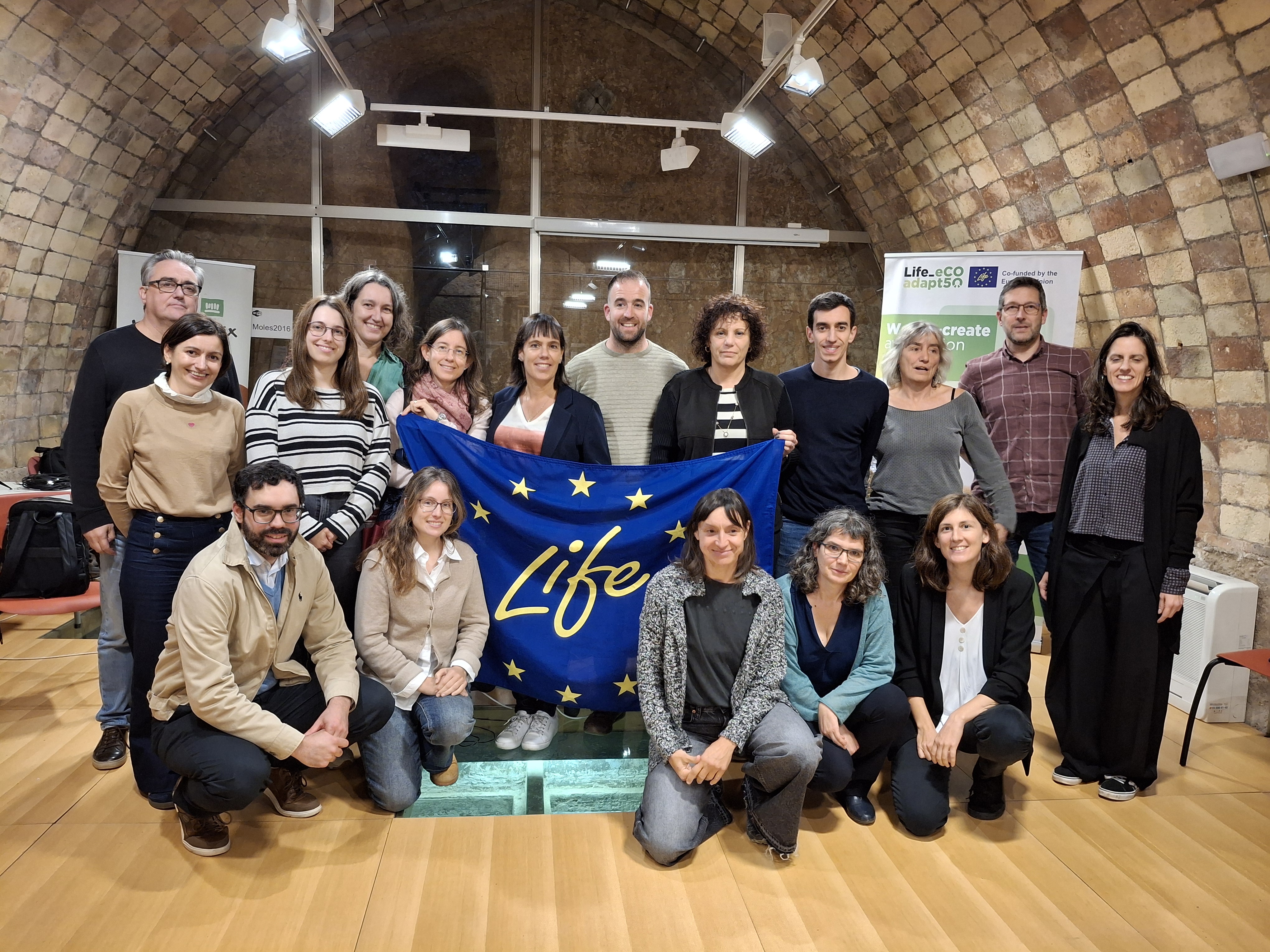
The opening presentation was given by Filo Martínez, the municipality’s Environment Councillor, Diana Oancea on behalf of CINEA, and Núria Parpal, the project director, who provided an initial overview highlighting the main milestones and results achieved during the nearly first three years of the project.
During the technical session, each work package leader (eleven in total) presented the key results and progress of their tasks since the start of the project (January 2023) and outlined the next steps. Regarding the financial part, a review of the budget execution status for the partners was carried out, and questions were addressed.
Field visits to ongoing actions
On Friday, November 7, about thirty people, including partners and technicians, joined CINEA’s team to visit ongoing actions. Specifically, they observed environmental restoration activities carried out by the Alt Penedès County Council (CCAP) along one of the banks of the Foix reservoir. These actions aim to improve hydraulic capacity and biodiversity by reducing sediment accumulation at the tail of the reservoir. The project includes removing invasive giant reed, creating new ponds, planting native trees and plants, and launching a pilot project to create a bioremediation channel that will act as a natural water filter.
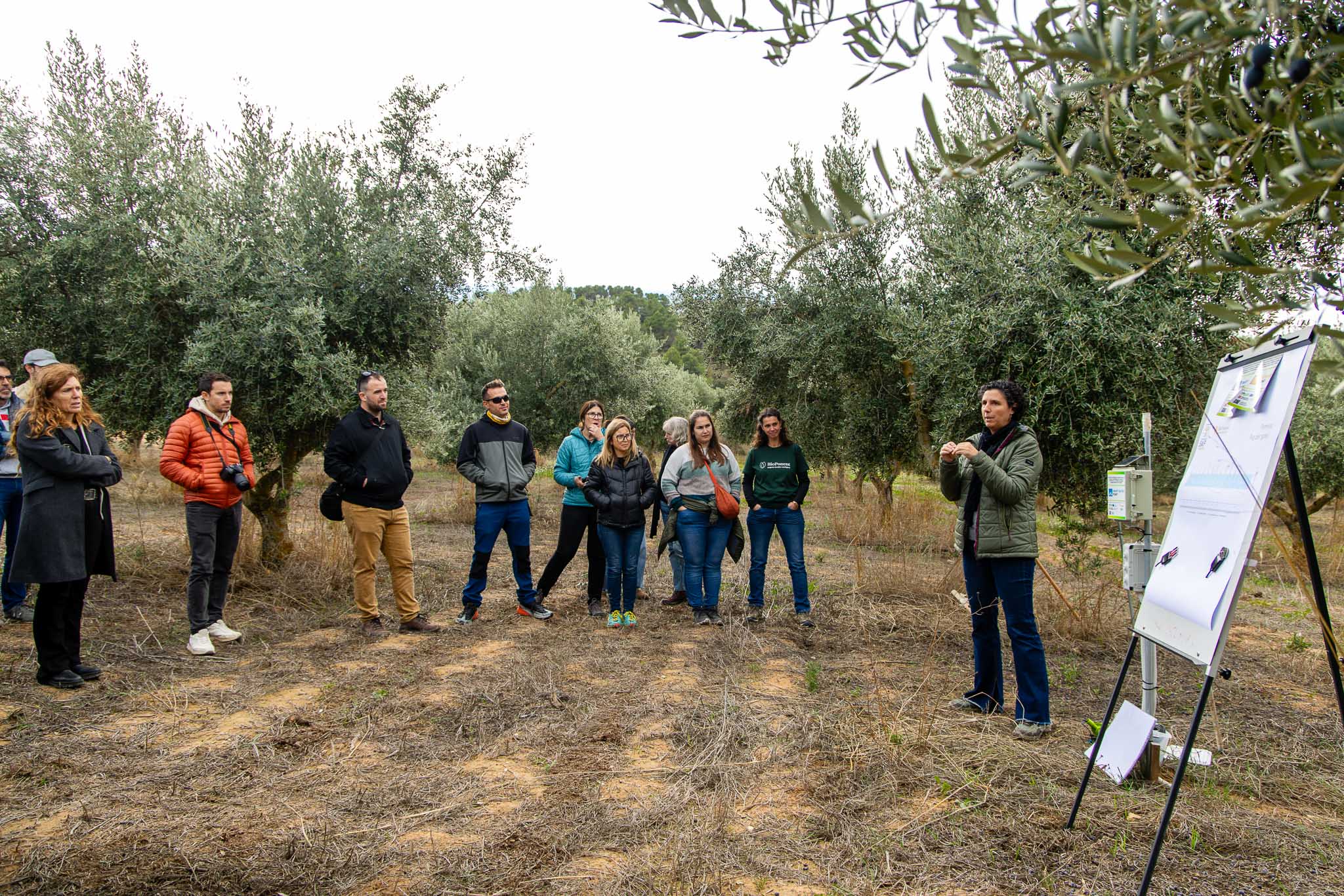
Later, they visited the Biosensors Network in Vallbona de les Monges and enjoyed an olive oil tasting. This project involves installing sensors to study irrigation needs and “learn” how to irrigate with maximum water efficiency. A biosensor network is being developed to help farmers make decisions based on real, on-site data.
The third visit was to Jorba, where they toured collaborative gardens, another CCAP initiative, and had lunch prepared by the Eixarcolant collective. This action conducts an ethnobotanical survey of the region’s horticultural heritage, and the genetic material will be stored in Eixarcolant’s seed bank in Jorba until a local seed bank is established.