
Unió de Pagesos organizes a course on dry-stone wall construction and restoration in Perelló within the framework of the Life eCOadapt50 project - Life eCOadapt50
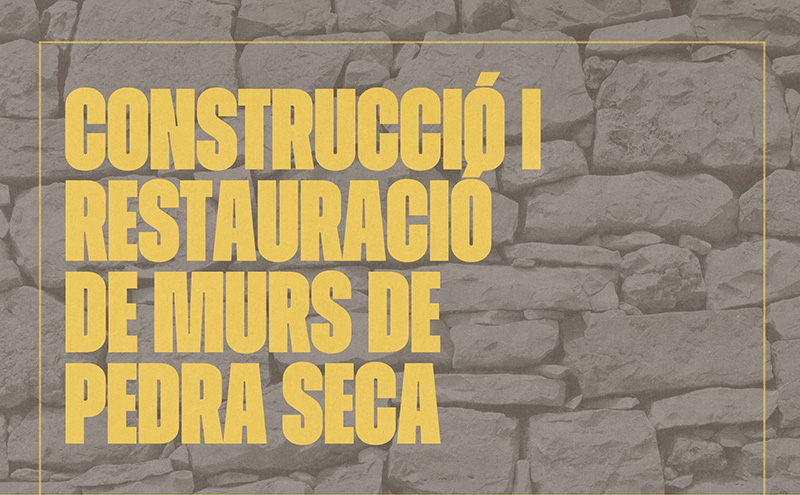
Throughout the two sessions (see programme), participants will work in the field accompanied by a master margener, who will guide the complete restoration of a dry-stone wall. The training will make it possible to understand the benefits of this ancestral technique in water retention and erosion reduction, while also highlighting its contribution to the conservation of the agricultural landscape and the memory of the territory.
The initial session will include the presentation of the Life eCOadapt50 project and the fundamentals of the margener craft, while the final session will culminate with the completion of the wall and a joint closing event. Registration is already open and places are limited. To participate, please contact 638 33 75 51 or send an email to jonquesa@uniopagesos.cat.
Infrastructure in the face of climate change
Dry-stone walls, built without any type of mortar and based on the precise fitting of stones, are among the most effective rural infrastructures for responding to the climate emergency. Various studies and Mediterranean experiences indicate that these walls provide a high drainage capacity that helps to slow erosion and stabilize the soil, reducing the risk of landslides during episodes of heavy rainfall.
They also act as elements that regulate runoff and retain water, promoting its gradual availability during dry periods and improving the adaptive capacity of agricultural systems to irregular precipitation. In addition, they function as small ecological infrastructures that enhance biodiversity, as they create microhabitats for plants, invertebrates and associated fauna, contributing to the resilience of rural landscapes in the face of climate impacts.
According to agroecological research initiatives, these traditional constructions also act as models of natural engineering capable of conserving water in the soil and reducing the risk of rockfalls and landslides, aspects that are particularly relevant in Mediterranean environments affected by recurring droughts and episodes of extreme rainfall.