Vila-sana hosts the first climate adaptation workshop for the rural tourism sector within the framework of Life eCOadapt50 - Life eCOadapt50
The workshop. Author: Life eCOadapt50
The session began with a welcome from the mayor of Vila-sana, Jaume Caballé Maso, and, afterwards, Sílvia Castañé, technician of the Diputació de Barcelona, contextualized the Life eCOadapt50 project and the objectives of the day: strengthening the resilience of Catalan rural tourism in the face of climate impacts and promoting a model more connected to the territory.
The first presentation was given by Mireia Font, owner of Casa Leonardo, who explained how, together with other rural houses in the territory, they have developed shared ecotourism proposals, such as the Route of the 5 Lakes. Font highlighted the importance of community management, care for the land and regeneration projects linked to the landscape.
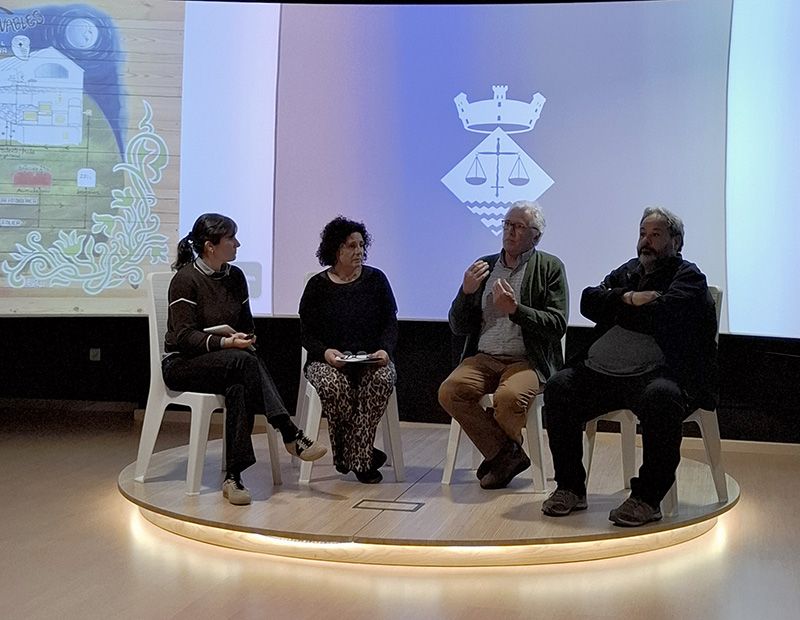
Next, a roundtable discussion was held, moderated by Melissa Acevedo, with the participation of Olga Ber from Lo Pagès del Montsec; Jaume Ramon from La Torre del Codina; and Xavier Camps, leisure director and environmentalist, TerraMar.
The conversation was structured into three thematic rounds: the real climate impacts already experienced by rural tourism businesses, the adaptation measures they have implemented, and the main challenges for the future. Issues addressed included changes in visitor behaviour, the adaptation of activities due to extreme weather conditions, strategies to avoid greenwashing, and concerns as a rural tourism business about being prepared for 2035.
Participatory activity: from diagnosis to proposals
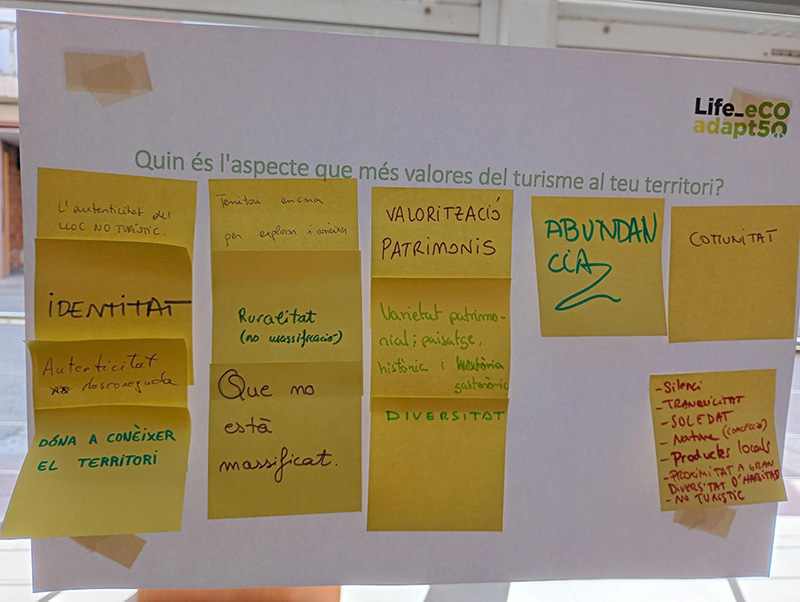
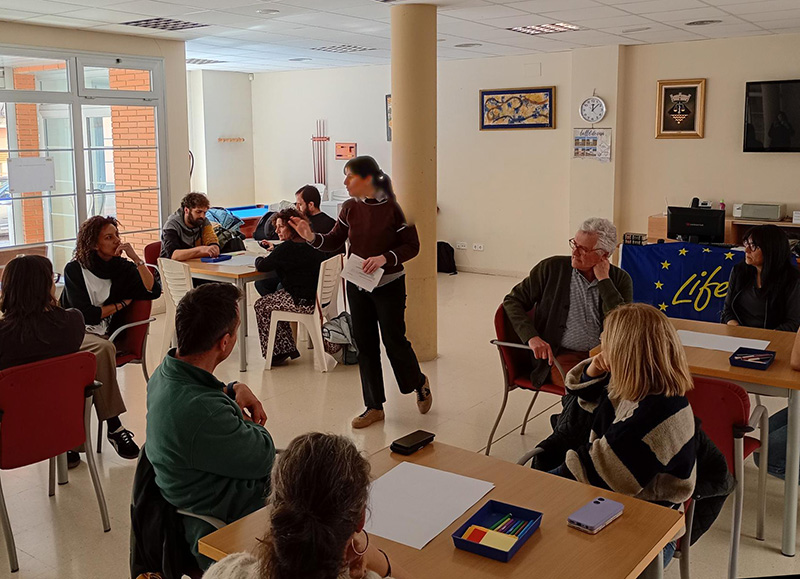
After a break, the day continued with a participatory activity aimed at identifying ecotourism opportunities in Ponent. Participants worked in groups to detect climate impacts already visible in the territory, identify vulnerable tourism activities, recognise practices that may worsen the situation and develop concrete adaptation proposals.
Each group selected a priority adaptation action and developed it in more detail. They also prepared a model using natural elements to visually represent their proposal. The session closed with a reflection on what tourism and ecotourism in Ponent should be like in the future.
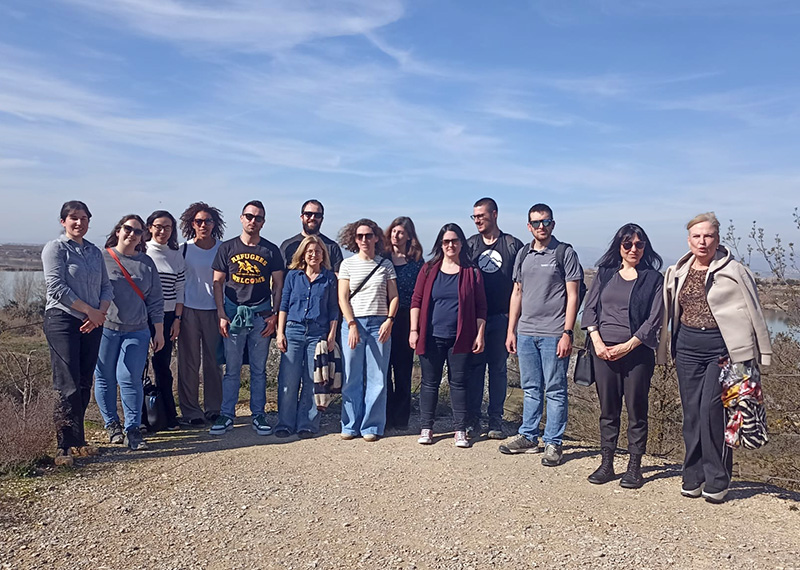
After a lunch with views of the Ivars and Vila-sana pond, attendees were able to visit in Ivars d’Urgell the Enciclopèdia Mural, an artistic project that connects nature, landscape and local identity, reinforcing the idea that climate adaptation is not only technical but also cultural and community‑based.
This first workshop confirms the commitment of the Life eCOadapt50 project to working collaboratively with the tourism sector to promote a more resilient, sustainable and territory‑rooted model.

Author: Enric Morera / ALP
The session began with a welcome from the mayor of Vila-sana, Jaume Caballé Maso, and, afterwards, Sílvia Castañé, technician of the Diputació de Barcelona, contextualized the Life eCOadapt50 project and the objectives of the day: strengthening the resilience of Catalan rural tourism in the face of climate impacts and promoting a model more connected to the territory.
The first presentation was given by Mireia Font, owner of Casa Leonardo, who explained how, together with other rural houses in the territory, they have developed shared ecotourism proposals, such as the Route of the 5 Lakes. Font highlighted the importance of community management, care for the land and regeneration projects linked to the landscape.
Next, a roundtable discussion was held, moderated by Melissa Acevedo, with the participation of Olga Ber from Lo Pagès del Montsec; Jaume Ramon from La Torre del Codina; and Xavier Camps, leisure director and environmentalist, TerraMar.
The conversation was structured into three thematic rounds: the real climate impacts already experienced by rural tourism businesses, the adaptation measures they have implemented, and the main challenges for the future. Issues addressed included changes in visitor behaviour, the adaptation of activities due to extreme weather conditions, strategies to avoid greenwashing, and concerns as a rural tourism business about being prepared for 2035.
Participatory activity: from diagnosis to proposals
After a break, the day continued with a participatory activity aimed at identifying ecotourism opportunities in Ponent. Participants worked in groups to detect climate impacts already visible in the territory, identify vulnerable tourism activities, recognise practices that may worsen the situation and develop concrete adaptation proposals.
Each group selected a priority adaptation action and developed it in more detail. They also prepared a model using natural elements to visually represent their proposal. The session closed with a reflection on what tourism and ecotourism in Ponent should be like in the future.
After a lunch with views of the Ivars and Vila-sana pond, attendees were able to visit in Ivars d’Urgell the Enciclopèdia Mural, an artistic project that connects nature, landscape and local identity, reinforcing the idea that climate adaptation is not only technical but also cultural and community‑based.
This first workshop confirms the commitment of the Life eCOadapt50 project to working collaboratively with the tourism sector to promote a more resilient, sustainable and territory‑rooted model.

Author: ALP
The session began with a welcome from the mayor of Vila-sana, Jaume Caballé Maso, and, afterwards, Sílvia Castañé, technician of the Diputació de Barcelona, contextualized the Life eCOadapt50 project and the objectives of the day: strengthening the resilience of Catalan rural tourism in the face of climate impacts and promoting a model more connected to the territory.
The first presentation was given by Mireia Font, owner of Casa Leonardo, who explained how, together with other rural houses in the territory, they have developed shared ecotourism proposals, such as the Route of the 5 Lakes. Font highlighted the importance of community management, care for the land and regeneration projects linked to the landscape.
Next, a roundtable discussion was held, moderated by Melissa Acevedo, with the participation of Olga Ber from Lo Pagès del Montsec; Jaume Ramon from La Torre del Codina; and Xavier Camps, leisure director and environmentalist, TerraMar.
The conversation was structured into three thematic rounds: the real climate impacts already experienced by rural tourism businesses, the adaptation measures they have implemented, and the main challenges for the future. Issues addressed included changes in visitor behaviour, the adaptation of activities due to extreme weather conditions, strategies to avoid greenwashing, and concerns as a rural tourism business about being prepared for 2035.
Participatory activity: from diagnosis to proposals
After a break, the day continued with a participatory activity aimed at identifying ecotourism opportunities in Ponent. Participants worked in groups to detect climate impacts already visible in the territory, identify vulnerable tourism activities, recognise practices that may worsen the situation and develop concrete adaptation proposals.
Each group selected a priority adaptation action and developed it in more detail. They also prepared a model using natural elements to visually represent their proposal. The session closed with a reflection on what tourism and ecotourism in Ponent should be like in the future.
After a lunch with views of the Ivars and Vila-sana pond, attendees were able to visit in Ivars d’Urgell the Enciclopèdia Mural, an artistic project that connects nature, landscape and local identity, reinforcing the idea that climate adaptation is not only technical but also cultural and community‑based.
This first workshop confirms the commitment of the Life eCOadapt50 project to working collaboratively with the tourism sector to promote a more resilient, sustainable and territory‑rooted model.

Author: Life eCOadapt50
The session began with a welcome from the mayor of Vila-sana, Jaume Caballé Maso, and, afterwards, Sílvia Castañé, technician of the Diputació de Barcelona, contextualized the Life eCOadapt50 project and the objectives of the day: strengthening the resilience of Catalan rural tourism in the face of climate impacts and promoting a model more connected to the territory.
The first presentation was given by Mireia Font, owner of Casa Leonardo, who explained how, together with other rural houses in the territory, they have developed shared ecotourism proposals, such as the Route of the 5 Lakes. Font highlighted the importance of community management, care for the land and regeneration projects linked to the landscape.
Next, a roundtable discussion was held, moderated by Melissa Acevedo, with the participation of Olga Ber from Lo Pagès del Montsec; Jaume Ramon from La Torre del Codina; and Xavier Camps, leisure director and environmentalist, TerraMar.
The conversation was structured into three thematic rounds: the real climate impacts already experienced by rural tourism businesses, the adaptation measures they have implemented, and the main challenges for the future. Issues addressed included changes in visitor behaviour, the adaptation of activities due to extreme weather conditions, strategies to avoid greenwashing, and concerns as a rural tourism business about being prepared for 2035.
Participatory activity: from diagnosis to proposals
After a break, the day continued with a participatory activity aimed at identifying ecotourism opportunities in Ponent. Participants worked in groups to detect climate impacts already visible in the territory, identify vulnerable tourism activities, recognise practices that may worsen the situation and develop concrete adaptation proposals.
Each group selected a priority adaptation action and developed it in more detail. They also prepared a model using natural elements to visually represent their proposal. The session closed with a reflection on what tourism and ecotourism in Ponent should be like in the future.
After a lunch with views of the Ivars and Vila-sana pond, attendees were able to visit in Ivars d’Urgell the Enciclopèdia Mural, an artistic project that connects nature, landscape and local identity, reinforcing the idea that climate adaptation is not only technical but also cultural and community‑based.
This first workshop confirms the commitment of the Life eCOadapt50 project to working collaboratively with the tourism sector to promote a more resilient, sustainable and territory‑rooted model.