
Strong Participation in the Regenerative Agriculture and Livestock Farming Course Series at Mas La Sala Cooperative - Life eCOadapt50
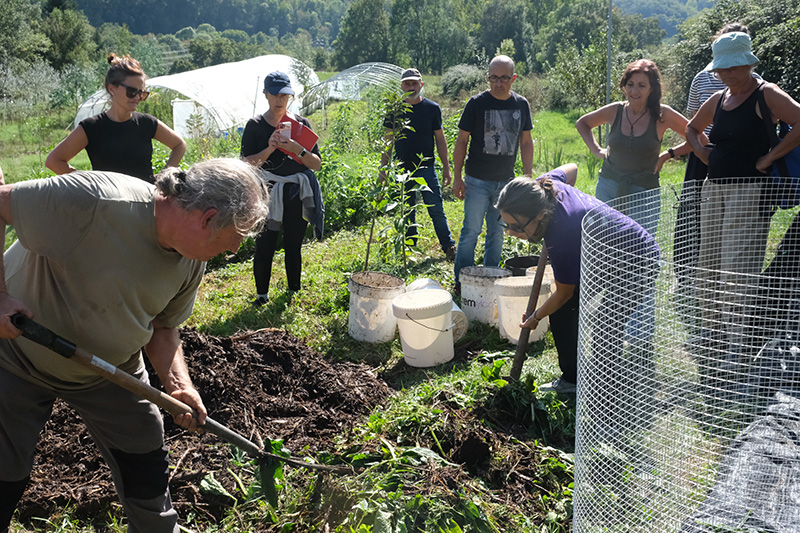
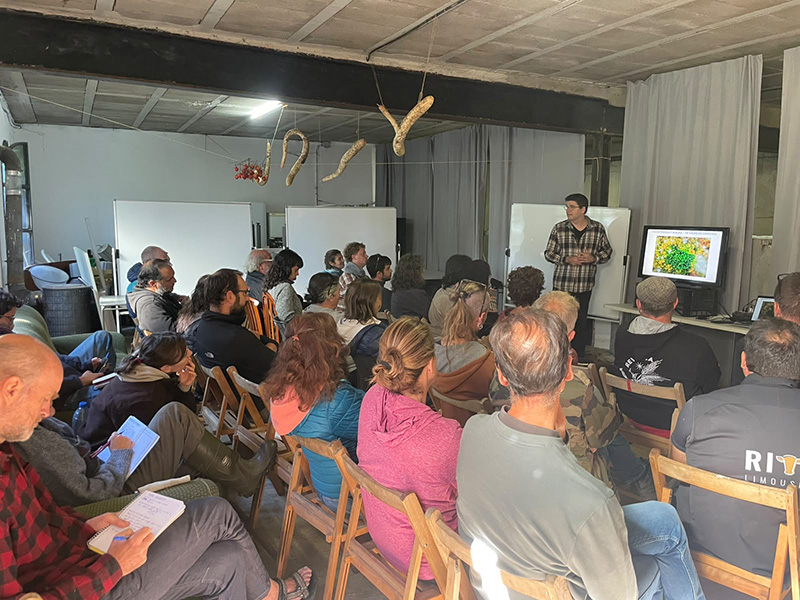
The first course was led by Josep Ramon Sainz de la Maza and Isadora Smith and focused on gaining a deeper understanding of soil dynamics and the role played by soil microbiology. The second course, delivered by Roger Rabes and Bruno Vasquetto, highlighted the principles and practical aspects of regenerative livestock farming.
Both courses aimed to democratize access to in-depth knowledge of these two closely related and essential topics for adapting the primary sector to climate change.
More than 30 people attended each course. Participants came from diverse backgrounds, but all shared the ability to influence some part of the Catalan territory. These were days of intensive learning, as well as opportunities to exchange questions, aspirations, concerns, and ideas for innovation and improvement.
Mas la Sala hosted both the theoretical and practical components of the courses. During the microbiology course, participants produced compost enriched with beneficial soil microorganisms and also examined under a microscope compost that had been produced more than two months earlier.
In the livestock course, participants were able to observe and discuss in practice all the concepts presented during the one-and-a-half days of training. Topics included genetics, rotational grazing techniques, deferred pastures, soil health, and above all, current challenges, limitations, and future opportunities.
According to the organizers, this is the direction the primary sector should follow: one that focuses on understanding the patterns and dynamics of nature. Such knowledge undoubtedly makes us far more resilient in the face of the uncertainty generated by climate change.