
The new Life Tour4Clima project works to accelerate climate action in the tourism sector - Life eCOadapt50
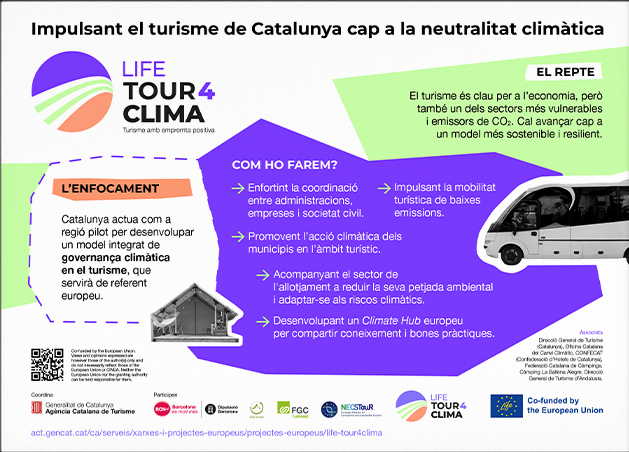
In this regard, LIFE Tour4Clima is a specific initiative aimed at boosting climate action in tourism and advancing towards a more resilient, integrated, and carbon‑neutral model. The project positions Catalonia as a European pilot destination in climate governance for tourism, with the intention of generating knowledge transferable to other regions.
The consortium leading the project is composed of the Catalan Tourism Board (Directorate General of Tourism and the Catalan Tourist Board, as coordinators), the Barcelona Provincial Council, the Catalan Railway Company (FGC), the environmental association eco-union, and the European network NECSTouR, with the collaboration of other institutional and sectoral stakeholders.
LIFE Tour4Clima will run until 31 August 2028, with a total budget of €1,931,613, co‑funded at 60% by the European Union’s LIFE Programme. The project is part of the Climate Action Plan for Catalonia’s Tourism Sector (2023) and aligns with the Glasgow Declaration on Climate Action in Tourism.
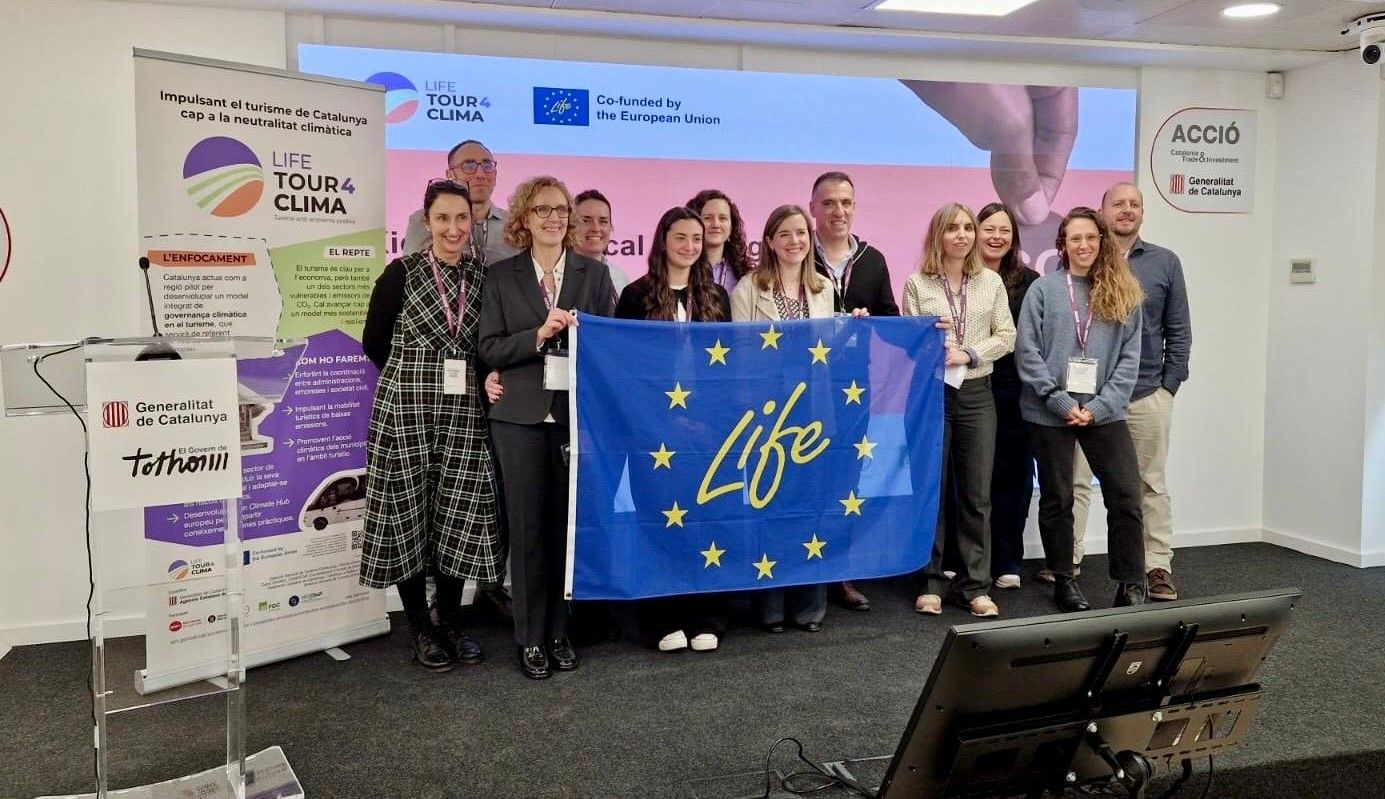
At a kick-off meeting held on Thursday, 29 January in Barcelona, the context, objectives and scope of LIFE Tour4Clima were presented, together with Catalonia’s role and commitment as a pilot territory in advancing climate action in tourism. The director of LIFE eCOadapt50, Núria Parpal, attended the session.
The event featured contributions from Cristina Lagé, Director General of Tourism; Ana Herrera, Deputy for Tourism at the Barcelona Provincial Council; Alicia Valle, Director General of the Catalan Railway Company; and Sonsoles Letang, Director General of Climate Change and Environmental Quality.
The project promotes actions aimed at:
- encouraging low‑emission tourist transport, particularly by improving sustainable accessibility to destinations;
- supporting municipalities in developing and implementing climate adaptation plans;
- and working with tourist accommodation providers to assess and enhance their climate preparedness through vulnerability assessment tools, environmental footprint calculation, and adaptation and mitigation recommendations.
Catalonia thus serves as a pilot laboratory to test and consolidate an integrated approach to climate governance in tourism, with the intention of sharing results and lessons learned across Europe through the NECSTouR network.