
Environmental improvement works completed at the tail of the Foix reservoir, an initiative promoted by the Alt Penedès County Council - Life eCOadapt50
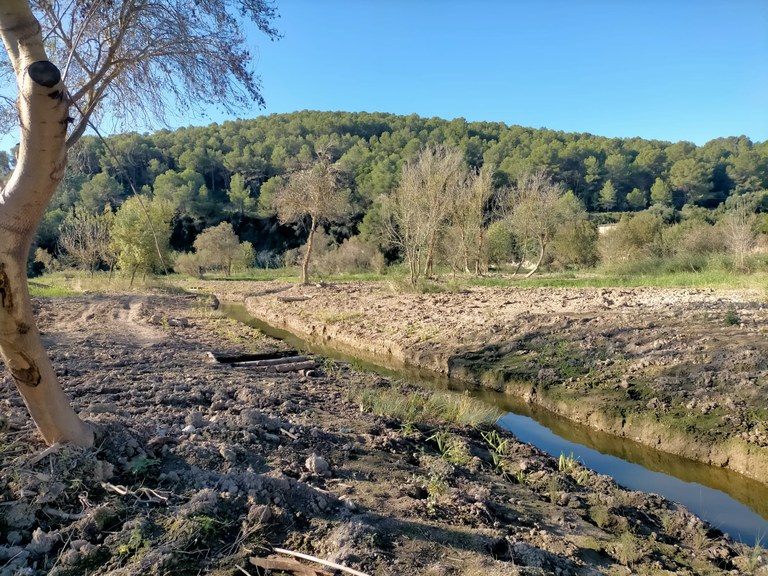
The main objectives were to increase the biodiversity of the area, prevent the spread of invasive species, and restore a balanced riparian ecosystem that will be more resilient to potential floods, one of the effects of climate change.
The newly created ponds help recover open water surfaces and curb the colonization of common reed, while the 200-meter bioremediation channel contributes to filtering diffuse pollutants. Planting native species strengthens the ecological quality of the area and ensures its long-term stability.
Institutional representatives agreed that the Foix reservoir is a green lung of the Penedès and a privileged space for biodiversity, classified as a Special Protection Area for birds by the European Union. The completion of these works is a step forward to ensure that this natural environment continues to improve and becomes a benchmark in the fight against climate change.
This project was made possible thanks to institutional collaboration between the Barcelona Provincial Council, which manages the Foix Park and drafted the project, the Catalan Water Agency, responsible for water management, the Government of Catalonia through the Department of Territory, Housing and Ecological Transition, which provided funding through Climate Funds, the Castellet i la Gornal Town Council, which assumed project management and part of the budget, and the Alt Penedès County Council, which channeled the grant obtained through the European Life eCOadapt50 project.