
Extreme Heat and Rising Temperatures Take Center Stage in the Second Issue of the Life eCOadapt50 Magazine - Life eCOadapt50
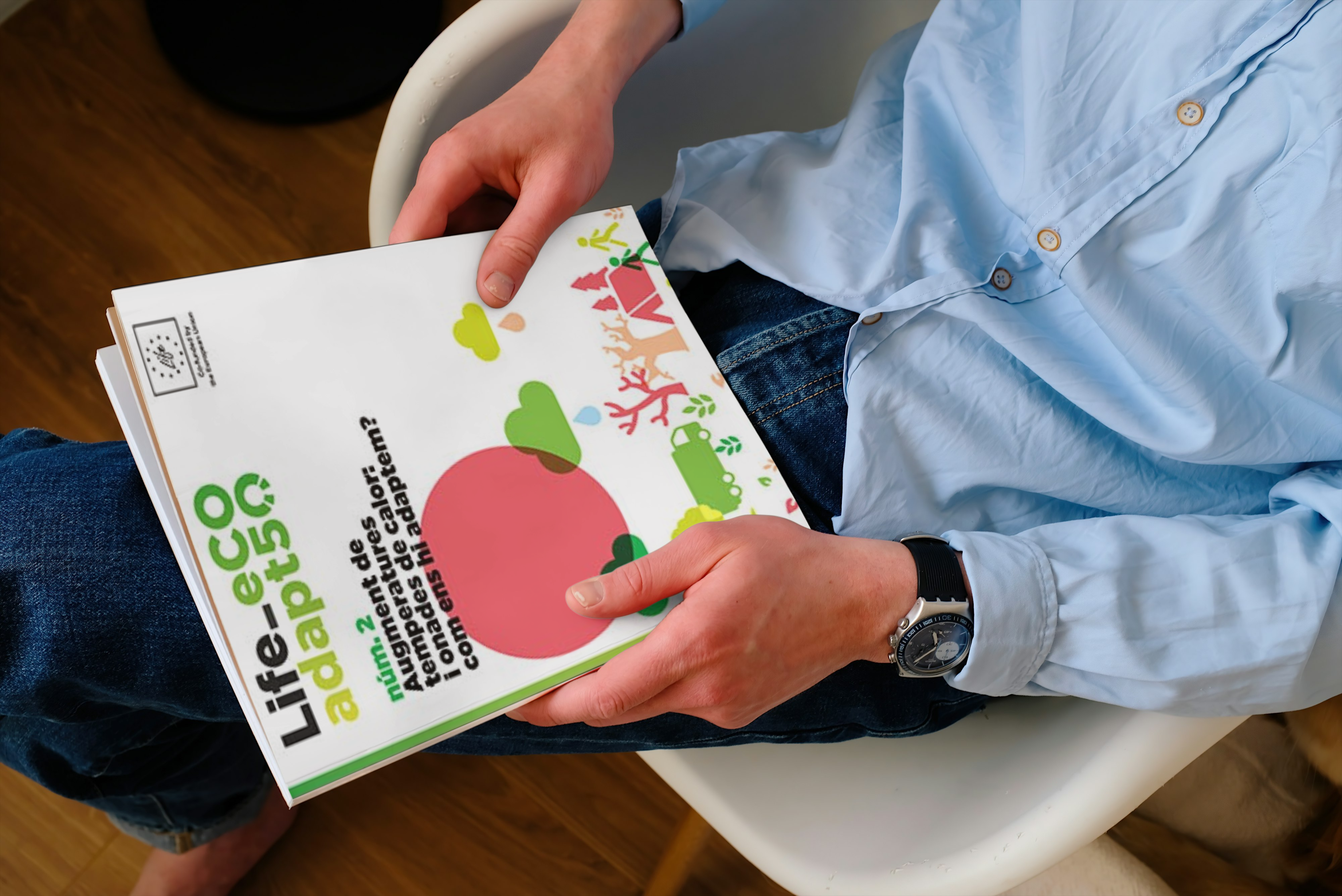
The magazine is based on an increasingly evident reality: Catalonia is experiencing a sustained increase in temperatures, along with more frequent, intense and prolonged episodes of extreme heat. This situation has direct consequences for human health, ecosystems and economic activities as diverse as agriculture, forest management, fisheries and tourism.
In this context, the publication includes contributions from the Meteorological Service of Catalonia, IRTA, Barcelona Provincial Council, Alba Sud and the University of the Balearic Islands, the Institute of Marine Sciences (ICM-CSIC), L’Espigall Agroconsultoria, CTFC, GALP Costa Brava, CCOO of Catalonia, UGT of Catalonia, the Decentralised Municipal Entity of l’Estartit, SUBMON, Girona Provincial Council and other organisations linked to the project.
The issue opens with an analysis by the Meteorological Service of Catalonia outlining the current and future climate context. Building on this framework, the magazine explores how extreme heat and rising temperatures affect agri-food production, forest health, tourism activities, marine ecosystems, fisheries, occupational health and working conditions, as well as territorial planning. It also proposes strategies to reduce vulnerabilities and strengthen adaptive capacity.
The publication also highlights pilot actions promoted within the LIFE eCOadapt50 framework. These include a study on the proliferation of filamentous algae in the Bay of Pals and the Medes Islands, linked to sea warming and changes in marine ecosystems, as well as forestry works carried out in the beech forests of Matagalls Mountain, aimed at improving biodiversity and enhancing forest resilience to drought, heatwaves and forest decline.
In addition, the magazine features inspiring local experiences, such as the creation of an outdoor climate shelter in l’Estartit. Developed through cooperation between the Decentralised Municipal Entity of l’Estartit, GALP Costa Brava and the LIFE eCOadapt50 project, the initiative consists of a wicker shade structure installed in a children's playground, providing shade and natural ventilation while improving thermal comfort in public spaces during periods of extreme heat. The interview about this initiative is also available on the project's YouTube channel.
With this second issue, the magazine invites readers to gain a deeper understanding of the effects of extreme heat and rising temperatures on the agricultural and livestock, forestry, tourism and fisheries sectors, combining a broad contextual perspective with concrete examples from across Catalonia. It also presents potential adaptation solutions, highlights the importance of strengthening the prevention of heat-related occupational risks, and showcases several actions developed within the project in the forestry, tourism and fisheries sectors.