
Life eCOadapt50 presents a poster at the Global Ecotourism Forum at Món Sant Benet - Life eCOadapt50
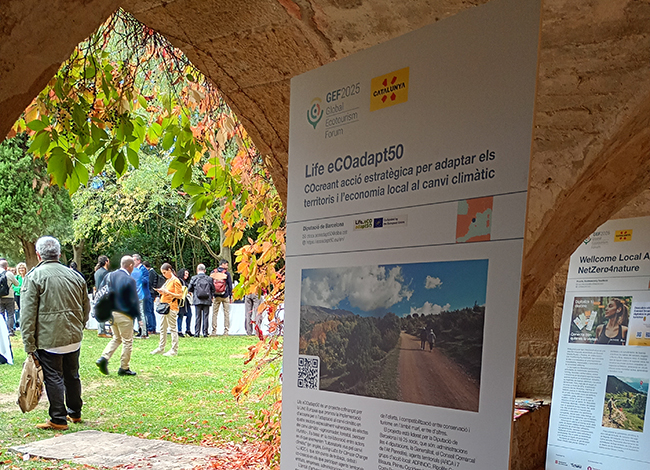
The forum featured two intense days of debate and reflection, highlighting the urgent need to transform the current tourism model into one that is regenerative, inclusive, and aligned with the preservation of natural heritage. The sessions, held on October 22 and 23, included 57 internationally renowned experts and brought together nearly 400 participants from over 15 different countries, establishing the forum as a global reference point for discussions on the future of sustainable tourism.
On Friday, October 24, experiential tours were organized through some of Catalonia’s most emblematic protected natural areas, such as La Garrotxa, Cadí-Moixeró, Montserrat, Sant Llorenç del Munt i l’Obac, and Montseny. The last two are fully accessible to promote ecotourism for all.
Innovation and inspiring projects
The Global Ecotourism Forum also featured the presentation of eight selected projects from over sixty applications, and gave visibility in poster format to 19 other initiatives, including Life eCOadapt50. These are innovative and transformative initiatives led by companies, institutions, and sector stakeholders, offering new perspectives on how tourism can drive positive change for territories and local communities.
Among them were projects like “Del mar a taula” (La Ràpita), combining traditional fishing and virtual reality; “Cork Experience,” focused on cork valorization; “Rewilding Europe,” aimed at restoring Iberian ecosystems; and the “Blue Tourism Initiative,” promoting a sustainable coastal tourism model.
Towards a new tourism culture
The forum concluded with key recommendations to move toward a sustainable and regenerative tourism model, including:
- Integrating policies and planning that place people and nature at the center of tourism development;
- Regulating territorial carrying capacity to avoid overcrowding;
- Promoting local scientific studies to support a global narrative based on data;
- Fostering multilevel and collaborative governance among institutions, businesses, and communities;
- Embracing value-driven digitalization and innovation as tools to address environmental and social challenges.