
The Barcelona Provincial Council presents the Life eCOadapt50 project at COP 30 as a European benchmark in climate change adaptation - Life eCOadapt50
With a budget of €18.6 million and 25 partners, the project has already launched actions in key sectors of the local economy, aiming to minimize impacts, mobilize €73 million in additional funding, and integrate climate adaptation into public and private policies.
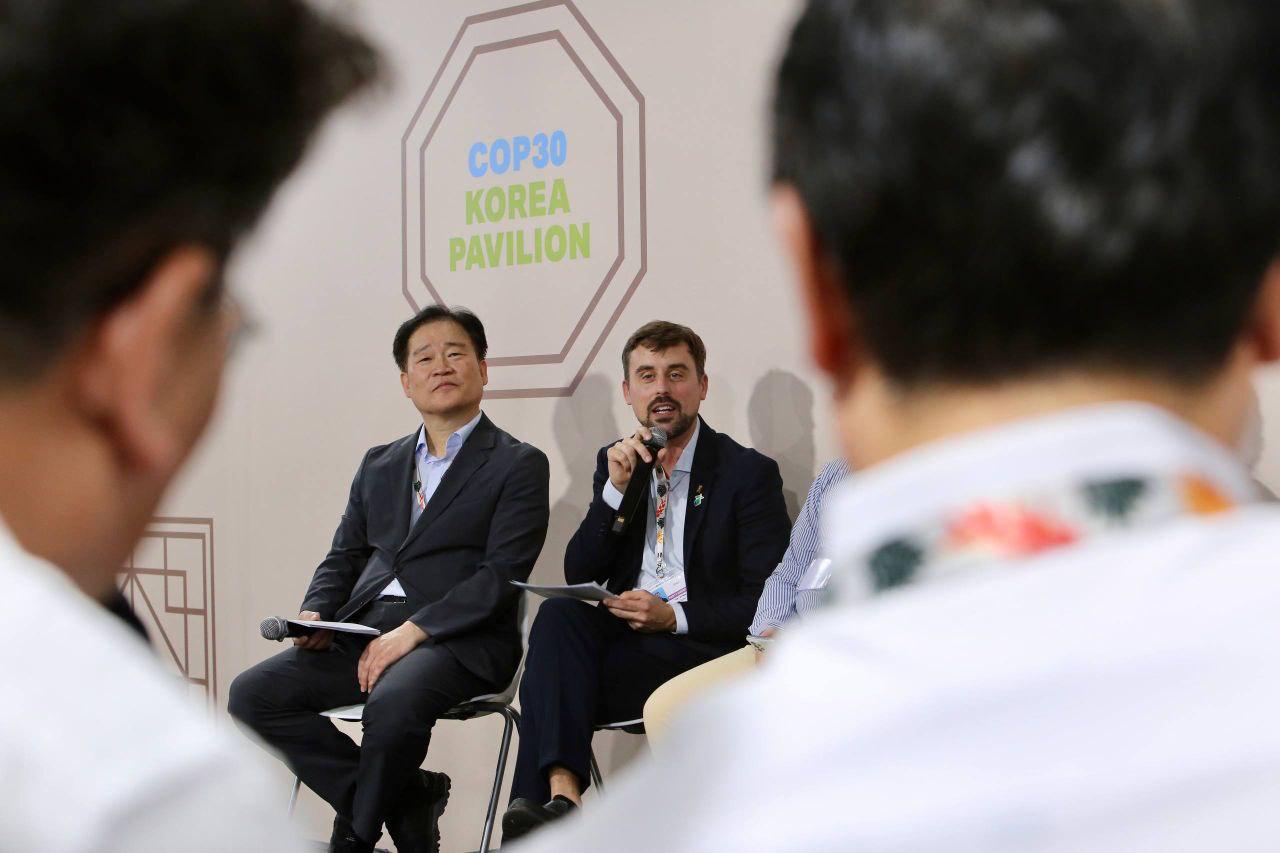
During the presentation to the media gathered at COP, Marc Serra, Deputy for Climate Action and Energy Transition at the Barcelona Provincial Council, stated: “This is a very ambitious program that should enable us to mobilize more than €70 million by 2030 to transform economic sectors such as agriculture, livestock, fishing, and forest management, which are the most vulnerable to the climate crisis.” Serra emphasized that the project aims to be an example for local governments, adding: “We want to identify and test concrete actions that, once implemented and evaluated, can be replicated across the territory.”
The Conference of the Parties (COP), now in its 30th edition in 2025, is an ideal space for presenting local adaptation initiatives, as it is the international meeting responsible for making the decisions necessary to implement the commitments made by countries in the fight against climate change. COPs bring together the 198 countries that have ratified the United Nations Framework Convention on Climate Change.
Among the main challenges addressed by Life eCOadapt50 are the risk of forest fires, water scarcity, and changes in agricultural and tourism patterns resulting from the climate situation. To tackle these, 36 actions have been launched in key sectors such as agriculture, livestock, forestry, tourism, and fishing, with innovative projects such as managing visitor flows in the municipalities of Rupit and Pruit to avoid tourism overload; a network of agroclimatic sensors to optimize water use in crops; forest interventions on beech trees in Matagalls, within the Montseny Biosphere Reserve, to increase biodiversity and resilience; an extensive livestock system with GPS collars and virtual fencing; and the implementation of portable desalination units on fishing vessels to reduce freshwater consumption, among many others.
Specifically, the use of geolocation systems and virtual fencing for monitoring and managing animals in extensive livestock systems with GPS collars aims to improve the competitiveness of small-scale livestock farms, create jobs in sparsely populated areas, reduce the risk of forest fires in grazing areas, and enhance the viability of extensive livestock operations, while promoting the benefits of these technologies for achieving competitive and sustainable extensive livestock farming. The action is being carried out in two locations, Agullana (Alt Empordà) and Sant Feliu de Pallerols (La Garrotxa), by various entities, with a combined cost of approximately €70,000.
The acquisition of two portable desalination units that produce 30 liters of fresh, potable water per hour, to be installed on two fishing vessels and tested for their feasibility in reducing water consumption, aims to improve water management by collecting seawater for cleaning and consumption, as well as promoting environmentally sustainable systems in fishing activities. With a budget of €20,000, the action has been implemented by the Costa Brava Local Fishing Action Group.
The recovery of ancestral grape varieties is driven by the Terra de Vitis association, with the involvement of INCAVI, the Ripollès County Council, and the Orís Town Council. Half a hectare has been planted with 500 vines of varieties dating from the 8th to 15th centuries, featuring genetic characteristics resistant to frost and drought. Scientific results are very positive.
Life eCOadapt50 has also promoted the creation of Living Labs for Climate Change (LL4CC), participatory governance spaces that bring together local authorities, NGOs, and citizens. So far, 77 meetings have been held, with more than 1,500 participants, resulting in over 100 proposed adaptation actions.
With five more years of work ahead, Life eCOadapt50 aims to expand co-creation in LL4CC, assess the impact of actions, involve the insurance sector, and consolidate climate adaptation in public and private policies in Catalonia.