
Environmental fallow - Life eCOadapt50
| Date of onset | 19/08/2024 |
| Sector | Agricultural and tourism |
| Lead partner | Consortium Leader of Rural Development of the Area |
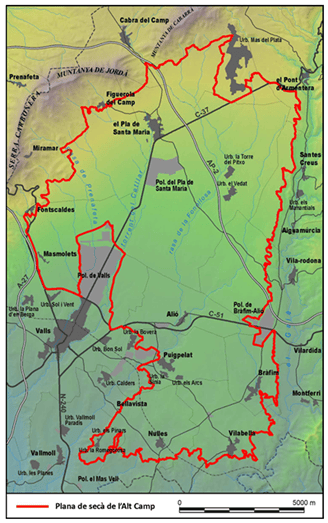
| Territory of performance | Plana desecà in Alt Camp |
| Climatic risk | Loss of ecological balance |
| Budget | 13.552,00 € |
Fallow, a key element in agriculture since the beginning
In general, cultivating the land involves extracting nutrients, both mineral and organic, in the form of crops, at a higher rate of that of their natural production. Likewise, the cultivation work that is carried out for the preparation of sowing or vegetation control, change the land structure and dynamics, interfering the natural transformation cycles of organic matter and the capacity of water retention.
Fallow practice, widely understood as the rest time allow to the land for it to regenerate, has been consubstantial in agriculture from the beginning and it is essential for land improvement and for the conservation of biodiversity since fields of dryland agricultural landscape provide shelter, food sources and a good habitat for the nesting of many species.
Improving soil quality and providing habitats favourable to biodiversity
This action will combine studies to identify threatened steppe bird species present in the Plana de Secà area in Alt Camp and the diversity of small invertebrates with the implementation of pilot tests of environmental fallows with the aim of improving land quality and provide habitats favourable to biodiversity.
To do so, strategic properties will be defined, analysed according to whether they favour the conservation of steppe birds, and in those plots where fallow is implemented biodiversity will be monitored.